

What Is an AI Agent, and Does a Small Business Need One?

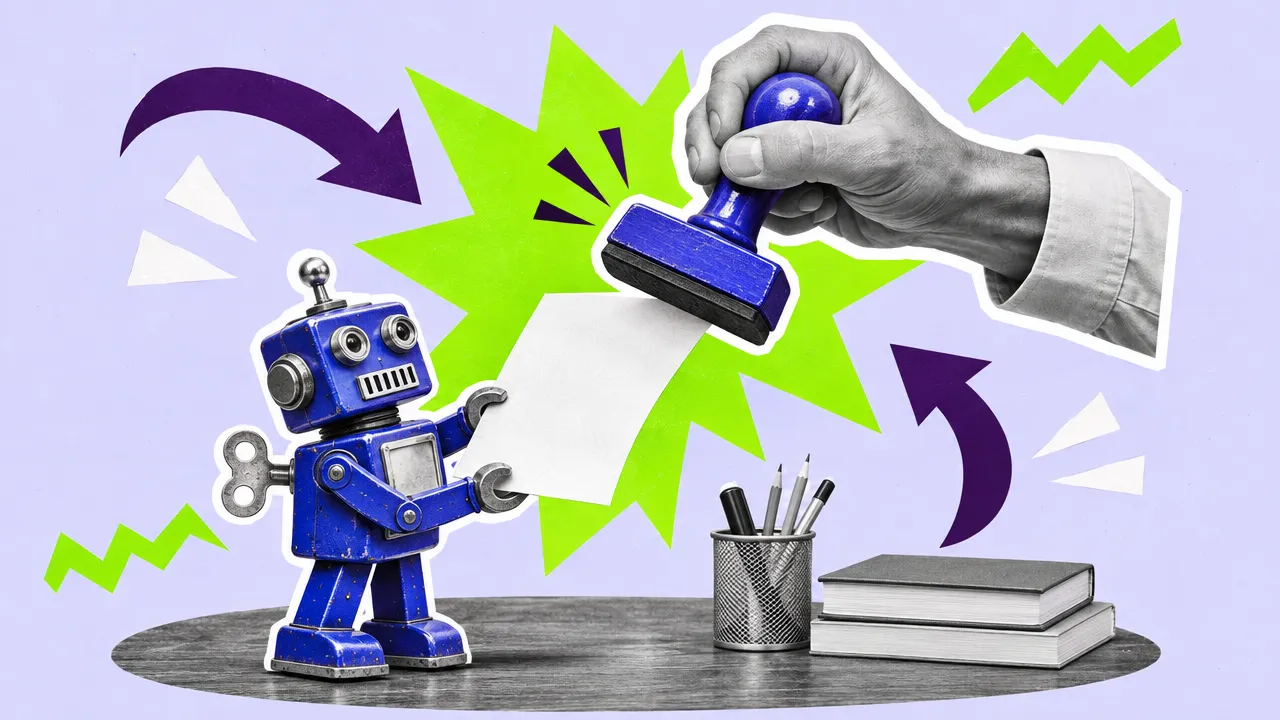
An AI agent is software that uses an AI model to work towards a goal. Instead of only answering a question, it decides the next step and uses tools, like your calendar or CRM, to carry it out. You’ll also see this called agentic AI.
The word is everywhere right now, and most of what’s written about it is aimed at big companies or at people selling something. This guide is for the owner of a small business in Malta who wants a straight answer: what is it, what can it really do, and is it worth it for a team of five?
What is an AI agent, in plain English?
Think of a new member of staff on their first day. You give them a clear job, access to the tools they need, and rules for when to ask you. An AI agent works in much the same way, and it has three parts:
- A model, the AI that reads, writes and decides what to do next. It’s the same kind of technology behind ChatGPT, Claude and Gemini.
- Tools, the things it’s allowed to use, such as your calendar, your CRM, your order system or a folder of documents.
- Instructions and limits: what the job is, what it can do alone, and when it must hand over to a person.
It then works in a loop. It looks at what came in, picks a step, uses a tool, checks the result, and carries on until the job is done or it needs help.
AI agent or chatbot: what’s the difference?
The old website chatbot follows a script: press 1 for opening hours. Newer ones use AI to answer in normal sentences, but they still only talk. The difference is whether the software can do something.
| Scripted chatbot | AI assistant | AI agent | |
|---|---|---|---|
| Understands normal sentences | No | Yes | Yes |
| Answers from your information | Only what’s scripted | Yes | Yes |
| Takes action in your systems | No | No | Yes, within limits |
| Needs safeguards | Few | Some | The most |
That last row is the catch. The moment software can act, a wrong answer can become a wrong booking or a wrong email, not just a wrong sentence.
What can an AI agent do for a small business?
The best jobs are dull ones. Here are some that suit a small team:
- Clinic or salon: answering questions about services and taking appointment requests outside opening hours.
- Online shop: telling customers where their order is and explaining the returns policy.
- Trades and contractors: asking a new enquiry the right questions, so you get the job details before you call back.
- Property or professional office: sorting incoming email, drafting replies for someone to approve, and filing documents.
- Any office: pulling the details out of invoices and forms, ready for someone to check.
Notice what these have in common: there’s plenty of repetition, the rules are clear, and a mistake is easy to catch.
Does a small business need one?
Often, no. Ask yourself these four questions about the job you have in mind:
- Does it happen often? Every day, not once a month. Setting up and looking after an agent takes work, so the job has to be worth it.
- Is it repetitive? If every case is different, a person will do it better.
- Are the rules clear? If you can’t explain the job to a new employee in a page, you can’t explain it to an agent.
- Is a mistake cheap? A wrong suggestion someone reviews is fine. A wrong payment isn’t.
Four yeses and it’s worth looking into. If not, start somewhere simpler. A good contact form, an online booking system or a plain automation may solve the problem for less. We cover those options in Do you need an app, or is a website enough? and What affects the cost of a website?
What can go wrong?
- It can be confidently wrong. AI can state something false in a calm, convincing way. Base it on your own information and test it with real questions.
- It can be tricked. People can type or hide instructions that try to make it misbehave. Limit what it can reach, and don’t connect it to anything it doesn’t need.
- It can quietly get worse. Your prices, policies and tools change, and the AI models change too. Someone has to keep checking its work.
- It can annoy people. Customers put up with a bot when it helps, not when it blocks them. Always give them a way to reach a person.
What do the rules say?
Two sets of rules matter most for a small business in Malta, and this is a summary, not legal advice:
- The EU AI Act. Since 2 August 2026, people must be told when they’re interacting with an AI system, unless it’s obvious. So your assistant should say it’s an AI.
- GDPR. If the agent handles customers’ personal data, the usual rules apply. You need to know which provider processes it and where, have the right agreements in place, and keep only what you need. GDPR also limits decisions with legal or similarly significant effects that are made purely by automated means, which is one more reason to keep a person in the loop.
How to start without wasting money
- Pick one job. Not “AI for the business”, but something like “answer questions about delivery”.
- Write down the rules. What does a good answer look like? When should it hand over?
- Gather your information. Up-to-date prices, policies and FAQs. An agent is only as good as what it can read.
- Start supervised. Have a person approve its work, and read its real conversations.
- Measure it. Count the hours saved and the mistakes made, then decide what it can do alone.
If your project is bigger than one job, it’s worth looking at funding too. Digitalise Your SME has an allowance for AI projects, though schemes change and close, so check the current rules first.
AI agent questions
 Didn't find your question?
Ask us directly. We reply within two working days, faster on WhatsApp.
What is an AI agent in simple terms?
Software that can work towards a goal by itself: it reads what comes in, decides the next step and uses tools like your calendar or CRM, within limits you set.
Is ChatGPT an AI agent?
On its own, ChatGPT is mainly an assistant that answers. Tools like it are adding agent features that can take steps for you, and the line is blurring. What matters is whether the software can act in your systems, and what it’s allowed to do.
What's the difference between an AI agent and automation?
Plain automation follows fixed steps: if this, then that. It’s cheaper and more predictable, so use it when the steps never change. An agent can handle messy input, like an email written in anyone’s words, and decide what to do with it.
Will an AI agent replace my staff?
For a small business, it’s better thought of as taking the repetitive part of a job, so your team has more time for customers and for work that needs judgement.
How do I get one for my business?
You can set up simple assistants yourself with off-the-shelf tools. For something connected to your own systems, see our AI agents service.
Sources
Regulation (EU) 2024/1689, the AI Act, Article 50, and Regulation (EU) 2016/679, the GDPR, Article 22.
Keep reading

Digitalise Your SME: What Malta’s Grant Really Covers

Website Builder or Web Design Agency? How to Choose
How to Make a Business Website: Steps and What to Prepare
Ready when you are.
Tell us what you need and we'll send a fixed quote.